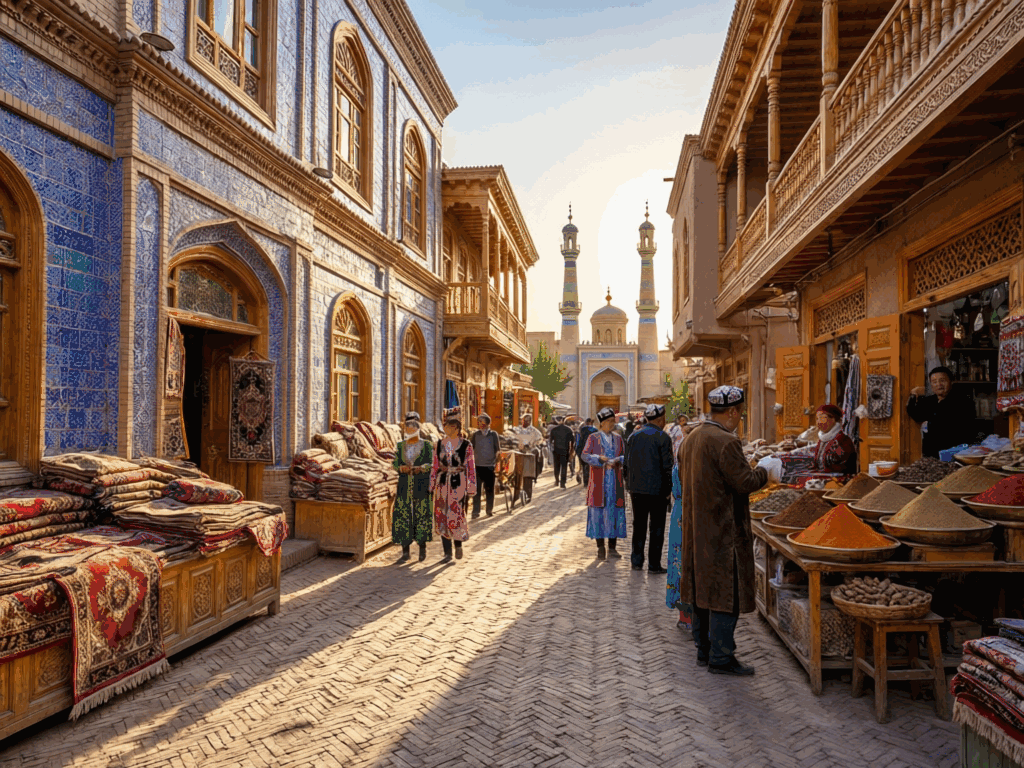
Why Kashgar Old City Is a Must-Visit
There are few places on Earth where you can stand on a single street corner and feel the weight of two millennia of human civilization pressing in from every direction. Kashgar Old City — known locally as Kashi — is one of them. Perched at the western edge of China's Xinjiang province, where the Taklamakan Desert meets the towering Pamir Mountains, this ancient oasis town has served as a vital crossroads for traders, pilgrims, armies, and scholars traveling the Silk Road for over 2,000 years.
Walking through Kashgar's old city is like stepping into a living museum of Central Asian culture. The narrow, winding alleyways are lined with centuries-old mud-brick houses adorned with ornate carved wooden doors and vibrant blue tiles. Artisans hammer copper pots in workshops unchanged for generations. The scent of freshly baked naan bread drifts from tandoor ovens on every corner. Children chase each other through courtyards while elders sip tea in the shade of grape trellises. This is not a tourist reconstruction — it is a thriving, breathing Uyghur neighborhood where traditional life continues much as it has for centuries.
Kashgar Old City at a Glance
- Over 2,000 years of continuous habitation — one of the oldest cities on the Silk Road
- Home to the Id Kah Mosque, the largest mosque in China
- The Sunday Livestock Market is one of Asia's most spectacular traditional markets
- UNESCO-recognized cultural heritage site with ongoing preservation efforts
- The Grand Bazaar has been a trading hub for over 2,000 years, with more than 5,000 stalls
For travelers seeking a genuine encounter with the Silk Road, no Kashgar travel guide can truly prepare you for the sensory overload that awaits. The Kashgar bazaar alone is worth the journey to western China. Whether you are drawn by the Uyghur culture, the architectural beauty of a Silk Road city, or simply the desire to experience something utterly unlike anywhere else, Kashgar Xinjiang delivers an unforgettable adventure.
History & Culture: 2,000 Years of Silk Road Heritage
Kashgar's history reads like an epic novel spanning empires, religions, and civilizations. As early as the 2nd century BCE, the city — then known as Shule — was a crucial waypoint on the Silk Road's southern route, linking China's interior with Central Asia, Persia, and the Mediterranean. Marco Polo passed through in the 13th century and described a thriving cosmopolitan city where merchants from India, Persia, and China traded silk, jade, spices, and precious stones.
The city's strategic location at the junction of the northern and southern Silk Road routes made it one of the most contested prizes in Central Asian history. Over the centuries, Kashgar has been ruled by the Han Dynasty, the Tibetan Empire, the Kara-Khanid Khanate, the Mongol Empire, the Chagatai Khanate, and the Qing Dynasty. Each conquering power left its mark — in architecture, language, religion, and cuisine — creating the extraordinary cultural palimpsest that visitors experience today.
The Heart of Uyghur Culture
Today, Kashgar is the cultural capital of the Uyghur people, a Turkic ethnic group with deep roots in Central Asian traditions and Islamic faith. Uyghur culture is rich and expressive — renowned for its Twelve Muqam musical tradition (a UNESCO Intangible Cultural Heritage), intricate woodcarving, vibrant textile arts, and the mesmerizing whirling dances performed at festivals and celebrations. The old city is the best place to witness these traditions in their natural setting, where craftsmen still practice skills passed down through dozens of generations.
Kashgar is where you understand that the Silk Road was never just about trade — it was about the exchange of ideas, art, faith, and human connection across the vastness of Asia.
Top Things to Do in Kashgar Old City
Kashgar Old City packs an extraordinary density of sights, sounds, and experiences into a compact, walkable area. Here are the essential highlights that every visitor should include in their Kashgar travel itinerary:
Id Kah Mosque (艾提尕尔清真寺)
Id Kah Mosque
Standing proudly at the center of Id Kah Square, this magnificent mosque was first built in 1442 and has been expanded and renovated over the centuries into a sprawling complex that can accommodate over 20,000 worshippers. The golden-yellow facade with its iconic twin minarets and central arch is one of the most photographed landmarks in all of Xinjiang. Inside, the vast prayer hall features elegant columns and intricate ceiling paintings. Non-Muslim visitors are welcome outside prayer times, and the peaceful courtyard offers a welcome respite from the bustle of the square.
Abakh Khoja Mausoleum (香妃墓)
This stunning 17th-century mausoleum complex is the holiest Islamic site in Xinjiang and one of the finest examples of Uyghur Islamic architecture anywhere. The mausoleum houses the tombs of five generations of the Khoja family, including the famous Abakh Khoja, a powerful 17th-century ruler. The building's facade is a masterpiece of glazed green and blue tiles, intricate calligraphy, and delicate geometric patterns. Locals call it the Fragrant Concubine's Tomb (Xiangfei Mu) after a legendary Kashgar woman who became a Qing Dynasty imperial consort. The surrounding gardens and the associated mosque complex make for a serene visit.
Sunday Livestock Market
Every Sunday, the dusty outskirts of Kashgar come alive with one of the most spectacular traditional markets in all of Asia. Thousands of Uyghur, Kyrgyz, and Tajik herders converge on the Sunday market Kashgar area to trade sheep, goats, cattle, horses, donkeys, and camels. The scene is raw, chaotic, and utterly unforgettable — animals bellow and jostle as buyers and sellers negotiate in multiple languages, slapping hands to seal deals in centuries-old tradition. Clouds of dust rise as horses are tested at full gallop, while families picnic on naan and kebabs at the edges of the market. Arrive early (before 9 AM) for the best light and the most active trading.
Kashgar Grand Bazaar (大巴扎)
The Kashgar bazaar has been the commercial heartbeat of the western Silk Road for over 2,000 years. Today, the Grand Bazaar is a sprawling indoor-outdoor complex housing more than 5,000 stalls selling virtually everything: Atlas silk fabrics, hand-knotted carpets, brass and copper household items, spices piled in colorful pyramids, dried fruits and nuts, traditional musical instruments, ornate jewelry, leather goods, and exquisitely crafted Uyghur knives. The atmosphere is electric — merchants call out in Uyghur, Mandarin, and occasionally English, while the aroma of cumin and cardamom fills the air. Set aside at least two to three hours to explore properly, and do not be afraid to bargain — it is expected and part of the fun.
Old City Walking Tour
Perhaps the most rewarding activity in Kashgar is simply wandering the old city on foot. The labyrinthine alleyways reveal hidden courtyards, centuries-old teahouses, copper workshops where artisans shape pots by hand, bakeries producing samsa from clay ovens, and the occasional invitation for tea from friendly residents. The old city underwent a major renovation in 2009-2015 that preserved the traditional architectural style while adding earthquake-resistant structures. Our SilkRoad Boutique guided cultural tours include an expert local guide who can introduce you to master craftsmen, arrange home visits, and explain the layers of history embedded in every doorway and courtyard.
Explore Kashgar With a Local Expert
Our bilingual Uyghur-speaking guides grew up in Kashgar and know every hidden corner, legendary teahouse, and master craftsman. Let us craft your perfect Kashgar experience.
Plan Your Kashgar TourFood & Dining: What to Eat in Kashgar
Kashgar is a paradise for food lovers. The city's cuisine is a delicious convergence of Central Asian and Chinese culinary traditions, with lamb as the undisputed star protein. The food here is bold, aromatic, and deeply satisfying — heavily seasoned with cumin, chili, black pepper, and fresh herbs. For a deeper dive into the regional cuisine, see our comprehensive Xinjiang Cuisine Guide. Here are the dishes you absolutely must try in Kashgar:
Polo / Pilaf (抓饭)
Kashgar's polo is legendary even within Xinjiang. Fragrant long-grain rice cooked in lamb fat with yellow and orange carrots, onions, raisins, and generous chunks of bone-in lamb. The best polo in Kashgar is served at lunchtime in the old city's family-run restaurants, cooked in enormous cast-iron cauldrons called qazan. Eat it the traditional way — with your right hand — for the full experience. A plate costs around 20-35 RMB and is filling enough for lunch.
Samsa (烤包子)
Kashgar's samsa — flaky pastries stuffed with spiced lamb and onion, baked inside a clay tandoor oven — are arguably the best in all of Xinjiang. Watch bakers press the dough against the oven's inner wall and retrieve golden, blistered parcels a few minutes later. Each samsa costs just 5-8 RMB and makes the perfect grab-and-go breakfast. Look for bakeries in the old city with queues of locals — that is always the sign of a good one.
Naan Bread (馕)
No meal in Kashgar is complete without naan. The old city's bakeries produce dozens of varieties daily — plain, sesame-crusted, stuffed with lamb (kawap naan), onion-filled, and sweet versions with honey and nuts. Fresh from the tandoor, the crust crackles and the interior is impossibly soft. Naan is considered sacred in Uyghur culture, so never place it upside down or waste it. Pick up a few from a street-side oven for just 3-5 RMB each — they make perfect snacks for long days of sightseeing.
Lamb Kebabs (烤肉串)
Kashgar's charcoal-grilled lamb skewers (kawap) are a revelation. Pasture-raised lamb — alternating lean and fat — is heavily seasoned with cumin and chili flakes, then grilled over long charcoal troughs until the fat renders into smoky perfection. You will find kawap vendors on virtually every street corner, especially near the bazaar and Id Kah Square. A bundle of 10 skewers costs around 5-10 RMB. Pair them with a piece of naan and a bowl of yogurt for a complete street-food feast.
Yogurt & Fresh Fruit
Kashgar's yogurt — thick, tangy, and naturally fermented — is typically topped with honey, crushed walnuts, and raisins. The dairy in this region is outstanding thanks to vast pastoral lands. Fresh fruit is equally legendary: Kashgar's dried figs, Hami melons, grapes, and pomegranates are among the sweetest in China, ripened by the extreme desert sunshine. Fruit vendors line the old city streets, and a small bag of mixed dried fruits makes a wonderful gift to bring home.
Shopping: What to Buy at the Kashgar Bazaar
The Kashgar Grand Bazaar and the old city's artisan workshops offer some of the most distinctive shopping in all of China. Here, you are buying directly from the people who make the goods, and prices are a fraction of what you would pay in Urumqi or Beijing. Bargaining is expected — start at 40-50% of the asking price and negotiate from there with good humor.
- Atlas silk — The vibrant, ikat-dyed silk fabric is the signature textile of Uyghur culture. Buy by the meter in the bazaar and have it tailored into a scarf, dress, or wall hanging. Prices range from 50-300 RMB per meter depending on quality.
- Hand-knotted carpets — Kashgar and nearby Hotan produce exquisite wool carpets with traditional geometric and floral patterns. A small prayer rug starts around 200 RMB; large room-sized carpets can cost thousands. They are remarkably durable and become family heirlooms.
- Musical instruments — Uyghur musical traditions are UNESCO-recognized, and Kashgar's instrument makers craft beautiful dutars (two-stringed lutes), rawaps (plucked string instruments), and dap (frame drums). These make extraordinary souvenirs, even if you cannot play them.
- Dried fruits and nuts — Kashgar's dried figs, raisins, walnuts, almonds, and apricots are among the finest in China. The desert climate concentrates sugars and flavors to an extraordinary degree. Buy in bulk at the bazaar for a fraction of tourist-shop prices.
- Yengisar knives — The nearby town of Yengisar has been forging ornate Uyghur knives for centuries. These beautifully decorated blades feature horn handles inlaid with brass and turquoise. Note: knives cannot be carried on flights — your guide can arrange shipping.
Practical Tips for Visiting Kashgar
Kashgar is a rewarding but logistically unique destination. Here is everything you need to know to plan a smooth and enjoyable visit to this remarkable Silk Road city. For broader Xinjiang travel advice, also see our Xinjiang Safety Guide and Xinjiang Travel Essentials.
Best Time to Visit
The ideal window for visiting Kashgar is from May through October, when temperatures are comfortable and the old city comes alive with outdoor activity. Peak season is July through September, when the fruit harvest fills the bazaars with fresh produce. Avoid midsummer (late July to mid-August) if you are sensitive to extreme heat — temperatures can exceed 38°C. The Sunday Livestock Market operates year-round but is most vibrant in spring and autumn. Winter (November through February) is very cold, with temperatures dropping below -10°C, but offers a crowd-free experience and atmospheric snow-dusted architecture.
How to Get There
| Transport | From | Duration |
|---|---|---|
| Direct flight | Urumqi | 2 hours |
| Direct flight | Beijing / Xi'an / Chengdu | 4-5 hours |
| Train | Urumqi | 16-24 hours (scenic) |
| Private car / tour | Via Duku Highway or Karakoram Highway | 1-3 days (epic road trip) |
Accommodation
Kashgar offers a growing range of accommodation options, from budget guesthouses in the old city to modern four-star hotels near Id Kah Square. For the most immersive experience, we recommend staying in a boutique guesthouse within or near the old city, where you can step directly into the maze of alleyways each morning. Our SilkRoad Boutique tours include handpicked accommodations that balance comfort, location, and cultural authenticity.
Language & Communication
In Kashgar, Uyghur is the primary language of daily life, though Mandarin is widely spoken in hotels, government offices, and larger businesses. English is limited outside of international-standard hotels and tour companies. We strongly recommend traveling with a bilingual guide or at minimum downloading an offline translation app such as Pleco (for Mandarin) and a Uyghur phrase guide. Learning a few basic phrases — 'Yahximusiz' (hello in Uyghur), 'Rahmat' (thank you) — will earn you warm smiles everywhere.
Etiquette & Cultural Tips
Kashgar Visitor Etiquette Checklist
- Dress modestly when visiting mosques — cover shoulders and knees; women should carry a headscarf
- Always ask permission before photographing people, especially in the old city and at markets
- Accept tea or food with both hands as a sign of respect — it opens doors to genuine friendships
- Never bring pork products or alcohol into halal restaurants — this is deeply offensive
- Remove shoes before entering prayer halls or private homes when indicated
- Carry your passport at all times — you will need it at checkpoints and hotel check-ins
- Bargain in good spirits at the bazaar — start at half the asking price and negotiate with a smile
Suggested 2-Day Kashgar Old City Itinerary
If you only have two days in Kashgar, here is a carefully paced itinerary that covers all the essential highlights while leaving room for spontaneous discoveries. This schedule works best if your second day falls on a Sunday, so you can experience the famous Sunday Livestock Market.
Day 1: Old City Immersion
| Time | Activity | Duration |
|---|---|---|
| 8:00 AM | Breakfast: fresh samsa and Uyghur milk tea at an old city bakery | 30 min |
| 9:00 AM | Guided walking tour of the old city alleys, artisan workshops, and courtyards | 3 hours |
| 12:00 PM | Lunch: polo (pilaf) at a family-run restaurant in the old city | 1 hour |
| 2:00 PM | Visit Id Kah Mosque and explore Id Kah Square | 1.5 hours |
| 4:00 PM | Kashgar Grand Bazaar — shopping and exploration | 2-3 hours |
| 7:30 PM | Dinner: lamb kebabs, laghman noodles, and yogurt at a local restaurant | 1.5 hours |
Day 2: Heritage Sites & Sunday Market
| Time | Activity | Duration |
|---|---|---|
| 7:30 AM | Early departure to Sunday Livestock Market (arrive by 8:30 for peak trading) | 3 hours |
| 12:00 PM | Lunch: kawap naan (meat-stuffed naan) from a street-side tandoor | 30 min |
| 2:00 PM | Abakh Khoja Mausoleum — Xinjiang's most beautiful Islamic architecture | 1.5 hours |
| 4:00 PM | Visit a traditional Uyghur teahouse for tea and live music | 1 hour |
| 5:30 PM | Final stroll through old city — last shopping, dried fruits, and photographs | 1.5 hours |
| 7:30 PM | Farewell dinner: Da Pan Ji (big plate chicken) shared feast | 1.5 hours |
Two days gives you the essentials, but if you can spare three or four, consider adding a day trip to Karakul Lake on the Karakoram Highway, or a visit to the ancient ruins of the Stone City at Tashkurgan. Our team can tailor your Kashgar itinerary to match your interests and pace.