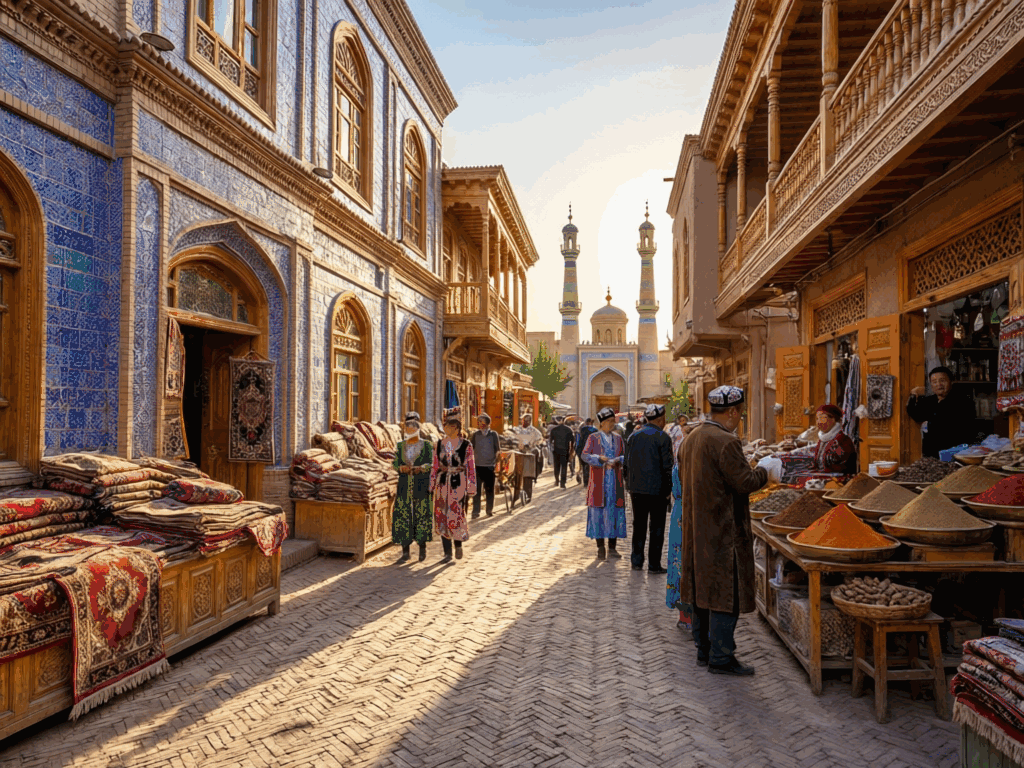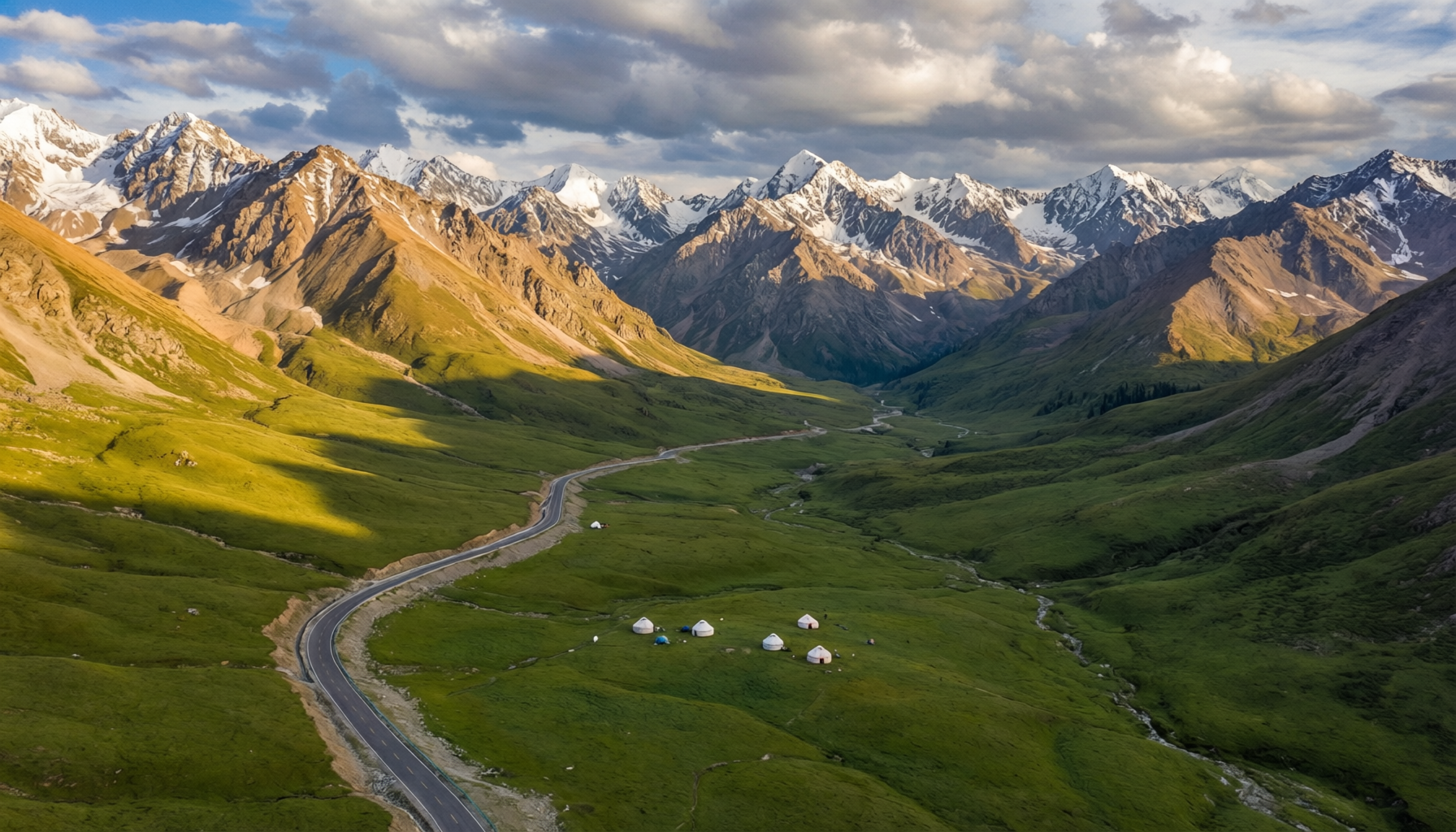
Imagine a single road that carries you from sun-baked desert canyons to snow-dusted alpine passes, through emerald grasslands dotted with Kazakh yurts, and finally to an ancient Silk Road city carved from red sandstone — all in a single drive. That road is the Duku Highway, and it only opens for four months each year.
Stretching 561 kilometers across the Tianshan Mountains on National Highway G217, the Duku Highway connects Dushanzi in the north to Kucha in the south. Locals say you 'experience four seasons in one day and different landscapes every ten miles.' At SilkRoad Boutique, we've guided dozens of clients along this route. Here's everything you need to plan your own journey.
Quick Facts
| Detail | Info |
|---|---|
| Distance | 561 km (349 miles) |
| Road | National Highway G217 |
| Route | Dushanzi → Kucha |
| Highest point | Hashilegen Pass, 3,400 m |
| 2026 season | June 1 – mid October |
| Vehicle limit | 7 seats or fewer |
| Driving hours | 08:00 – 22:00 |
| Recommended | 3 days minimum |
When to Go
June is the photographer's choice. Fresh green grasslands, wildflowers blooming at Nalati and Tangbula, and lingering snow on the peaks create stunning contrast. Crowds are moderate. If you also want to see the Ili lavender fields — China's Provence — June is the only window to combine both.
July offers the most saturated scenery: lush grasslands at their peak, full rivers from snowmelt, and dramatic cloud formations. It's also peak domestic tourist season — expect congestion and fully booked hotels. The Naadam Festival in Bayanbulak (mid-to-late July), with Mongol horse racing and traditional dancing, is a highlight.
August is when Bayanbulak reveals its most famous spectacle. At the Nine Bends and Eighteen Turns viewpoint, the winding Kaidu River catches the setting sun at just the right angle, creating reflections that look like 'nine suns' in the water. This rare optical event lasts no more than two minutes, and mid-August is the optimal window.
September is the insider's pick. Golden autumn grasslands, turning foliage, and crystalline light make it many experienced travelers' favorite month. Crowds drop significantly. The risk is that early cold snaps can close the road ahead of schedule.
The Journey: Stop by Stop
Dushanzi Grand Canyon
The highway's northern gateway. A dramatic eroded canyon with bizarre geological formations, a glass bridge, and a cliff swing. Allow 1–2 hours. Fee: ~30 CNY. Late afternoon light is best for photography, and this is one of the most drone-friendly spots on the route.
Hashilegen Pass (3,400 m)
The roof of the journey. Year-round glaciers flank the road, and a unique 'snow-protection gallery' — a tunnel built to guard against avalanches — marks the descent. Even in summer, temperatures can drop to 10°C. Walk slowly to avoid mild altitude effects. The view of green spruce against white snow is unforgettable.
Tangbula Hundred-Mile Gallery
A free, open grassland corridor that most tour buses skip. Horseback riding, wildflower photography, and a peacefulness you won't find at the more famous stops. No entrance fee. One of the route's hidden gems.
Nalati Grassland
Known as the 'aerial pasture,' Nalati sits at around 2,000 meters with winding rivers, wildflowers, Kazakh yurt settlements, and snow-capped Tianshan peaks. Three scenic routes available. Entry: 95 CNY plus shuttle (40–100 CNY). Tickets valid for two days.
Where to stay: Hotel Indigo Nalati (IHG) is the standout luxury option — standalone soaking tubs with panoramic snow-mountain views, an indoor pool, and a restaurant fusing Kazakh traditions with contemporary cooking.
Bayanbulak Grassland
At 2,500 meters, this vast highland wetland is home to China's only swan nature reserve and the iconic Nine Bends and Eighteen Turns sunset viewpoint. The Kaidu River's reflections can create the illusion of nine suns — arrive well before sunset and bring a tripod. Entry: ~70 CNY plus shuttle ~75 CNY.
Where to stay: Holiday Inn Bayanbulak (IHG). Rooms with heating are essential — nights are cold even in midsummer at this altitude.
Tianshan Mysterious Grand Canyon
Also known as Kiziliya ('red cliffs'), this 5.5 km red sandstone gorge narrows to just 0.4 meters — you'll need to turn sideways. Fee: ~45 CNY. Visit before 9 AM or after 6 PM to avoid intense midday heat. Dawn and dusk reveal gradient colors. Wear non-slip shoes.
Kucha (Kuqa)
The southern terminus and an ancient Silk Road city — once the capital of the Kingdom of Kucha. The Old City preserves traditional Uyghur earthen homes. The Han Bazaar Night Market is ideal for dinner. A 65 km detour takes you to the Kizil Thousand-Buddha Caves (1,800 years of history, predating the Mogao Grottoes). Entry: 70 CNY.
Suggested Itineraries
Classic Route — 3 Days / 2 Nights (Recommended)
Day 1: Dushanzi Canyon → Hashilegen Pass → Tangbula → overnight Nalati. Day 2: Morning Nalati → Bayanbulak sunset → overnight Bayanbulak. Day 3: Dragon Pools → Tianshan Canyon → Kucha Old City and night market.
Luxury Extended Route — 5 Days / 4 Nights
Adds Heavenly Lake near Urumqi on Day 1, a full day exploring Nalati (horseback riding, yurt visits, photography), and the Kizil Caves on the final day. Contact us and we'll design the details around your preferences.
Plan Your Duku Highway Adventure
We specialize in premium, tailor-made Xinjiang itineraries — luxury accommodation, private drivers, English-speaking guides. Every detail handled so you can focus on the experience.
Contact UsPractical Tips
Fuel — Stations at Dushanzi, Qiaerma, Nalati, Bayanbulak, and near the southern end. Golden rule — fill up whenever you see a station, and never let your tank drop below half.
Cell coverage — Spotty to nonexistent through most mountain sections. Download offline maps before entering, and carry cash — mobile payment won't work without signal.
Altitude — Highest pass is 3,400 meters — enough for mild altitude effects in sensitive travelers. Walk slowly at high passes, stay hydrated.
Driving — Fully paved but sharp switchbacks, blind corners, and occasional rockfall. Experienced driver strongly recommended. Speed cameras enforce 40–60 km/h. No driving after 22:00.
Weather — Temperature swings of 20°C+ within a single day. Pack layers, windbreaker, warm fleece or down jacket, rain gear, sunscreen, and sunglasses.
Permits — No special permit required. A standard Chinese tourist visa is sufficient.
For more background, see Wikipedia's article on Duku Highway.
For more background, see China Highlights's article on travel resource.
Frequently Asked Questions
Yes. The road is well-maintained and no special permit is needed. An experienced driver familiar with mountain roads is strongly recommended.
No — the road is fully paved and a sedan is fine. An SUV offers more comfort on winding sections but isn't required.
lavender fields." data-zh="两天是最低限度。三天比较舒适。五天可以顺带游览赛里木湖和伊犁薰衣草田等附近景点。">Two days is the absolute minimum. Three days is comfortable. Five days allows you to combine nearby attractions like Sayram Lake and the Ili lavender fields.
June for wildflowers and lavender. August for the Bayanbulak sunset. September for autumn colors and fewer crowds. July has the best scenery but the heaviest crowds.
Foreigners need a valid Chinese driver's license to drive in China. Most travelers prefer a private vehicle with a local driver, which also serves as an informal guide.